
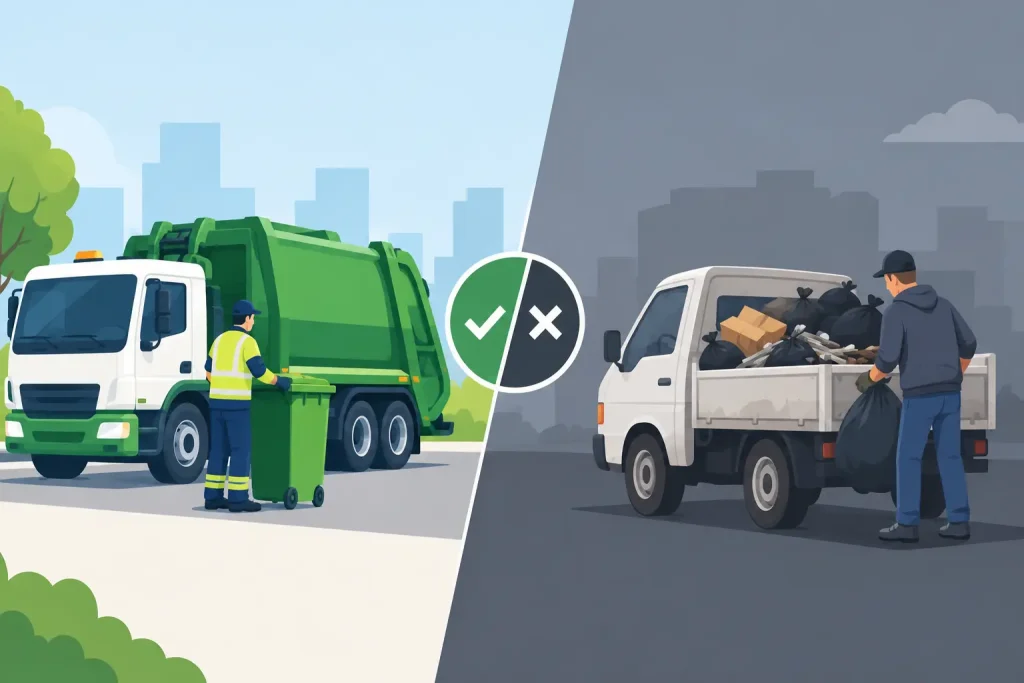
Waste Carrier Versus Unlicensed Collector Explained
A waste carrier versus unlicensed collector is not simply a choice between two prices. It can determine whether your unwanted furniture, builders’ waste or black bags reach an authorised facility or are dumped on a roadside, alleyway or private land. If rubbish is traced back to you, choosing the cheapest collection can become a costly and stressful mistake.
For homeowners, tenants, landlords and businesses across London and Surrey, the practical answer is straightforward: use a collector who can show they are properly registered to carry waste, explain where it will go and provide clear collection paperwork. That reassurance matters just as much whether you are clearing a single sofa or an entire property.
Waste carrier versus unlicensed collector: the key difference
A registered waste carrier is authorised to transport waste as part of their work. In England, registrations are recorded with the Environment Agency. A legitimate clearance company should be able to provide its registration details when asked and should have a clear process for handling, sorting and disposing of the items it collects.
An unlicensed collector may offer a tempting deal through a leaflet, social-media post or a knock at the door. They may say they can take everything immediately for cash, often at a price that appears far below established clearance firms. Some may be genuine people who do not understand the rules, but that does not make the collection lawful. Others are knowingly avoiding disposal charges and may fly-tip the load once they have been paid.
Registration is not a magic guarantee of good service. A responsible customer should still check the details, agree the scope of work and keep their paperwork. But a collector who cannot or will not provide registration information gives you no reason to trust where your rubbish is going.
Your duty does not end at the kerb
Householders have a duty to take reasonable measures when passing waste to someone else. This means making sensible checks rather than handing over bags or bulky items to the first person who offers. If your address, packaging or identifiable belongings are found in fly-tipped waste, the local authority may investigate how it got there.
For landlords, managing agents, builders and businesses, the responsibility is more formal. Commercial waste transfers need proper documentation, and records should be retained. This is especially relevant after an office clearance, refurbishment or end-of-tenancy clean-out, where a large mixed load can contain confidential papers, electrical items, timber, fixtures and general rubbish.
How to check a rubbish collector before booking
Checking a collector need not slow down an urgent clearance. A professional firm should expect the questions and answer them plainly before arrival. Ask for their waste carrier registration number, then verify it on the Environment Agency’s public register. Ensure the business name on the registration matches the company you are dealing with.
You should also ask what paperwork you will receive. For commercial collections, a Waste Transfer Note is a key record of the transfer. For domestic clearances, ask for a written receipt or collection record that identifies the company, date and the waste removed. A reputable provider will not treat documentation as an inconvenience – it is part of a lawful service.
Before accepting a quote, be clear about what is included. Does the price cover loading, labour, travel, disposal charges and VAT where applicable? Will there be an extra charge for heavy rubble, soil, plasterboard, mattresses, fridges or other items that require specialist treatment? A low starting price that rises once the crew is on site is not the transparent service most customers expect.
A quick photo estimate is often the simplest way to get an accurate quote. Send clear pictures of the waste, include access details such as stairs, parking restrictions and distance from the property, and mention anything unusually heavy or awkward. This gives the collector a fair basis to price the work and send the right-sized team and vehicle.
Warning signs of an unlicensed collector
One warning sign alone does not always prove wrongdoing. Taken together, however, these signs should make you pause before agreeing to a collection:
- They refuse to provide a waste carrier registration number or say paperwork is unnecessary.
- They offer an unusually cheap cash-only price but cannot explain where the waste will be taken.
- They pressure you to decide immediately, particularly after arriving uninvited.
- They use an unmarked vehicle and provide no business name, address or receipt.
- They ask you to leave rubbish outside for later collection without confirming a collection time or record.
Be cautious with offers to remove “anything at all”. Some materials require separate handling, and a responsible collector will ask questions rather than blindly load everything. Fridges and freezers, for example, contain components that need suitable treatment. Paint, chemicals, gas bottles, batteries, asbestos and certain electrical items may need specialist arrangements. A firm that assesses these materials properly is helping protect you as well as the environment.
What lawful rubbish removal should look like
A proper clearance is usually more ordinary and more organised than people expect. You agree what needs removing, receive a clear price, and the team arrives at the agreed time to do the lifting and loading. They should leave the area swept and tidy, not create another job for you once the lorry has gone.
After collection, waste should be taken to authorised recycling and disposal facilities. Reusable furniture, metal, wood, cardboard and other recoverable materials can often be separated from general waste. The precise recycling rate will depend on the condition and mix of the load, so no responsible company should promise that every item will avoid landfill. What they should promise is to make reasonable efforts to divert reusable and recyclable materials wherever suitable facilities are available.
For a house or flat clearance, this may mean separating usable furniture from broken items, setting aside electricals, and identifying materials that need different disposal routes. For builders’ waste, it can mean keeping rubble, timber, metal, plasterboard and mixed renovation debris appropriately managed. The work is physical, but the legal and environmental side of it matters just as much.
Chums Clearance provides licensed rubbish removal across London and Surrey, with lifting, loading, lawful disposal and clear documentation handled as part of the service. Same-day or next-day collection may be possible depending on availability, but a fast booking should never mean skipping the checks that keep your clearance legal.
When another option may suit you better
Using a registered clearance company is not the only lawful way to get rid of rubbish. If you have a small amount of household waste and suitable transport, you may be able to take it to a household recycling centre yourself. Check the site rules first, especially if you are using a van, carrying construction materials or disposing of items from a business.
A skip can suit a longer renovation where waste will build up over several days. However, you will need space for it, may need a permit if it sits on a public road, and must load the waste yourself. Skips also have restrictions on certain materials. For a one-off flat clearance, a loft full of unwanted items or heavy furniture that needs carrying downstairs, a man-and-van clearance service is often more convenient.
The right option depends on volume, access, timescale and how much labour you can safely manage. What should not change is the need for lawful disposal. Whether you use a recycling centre, a skip provider or a clearance company, make sure the route for your waste is legitimate.
Keep a simple record of every collection
Once the rubbish has been removed, keep the quotation, receipt and any Waste Transfer Note or collection record together. Take a few photographs before the work starts if you are clearing a rental property, vacant house, office or building site. These small steps create a useful record of what was removed and who collected it.
For commercial premises and landlords managing multiple properties, make this part of your normal handover process. Record the collection date, the company used, the nature of the waste and the paperwork reference. It takes minutes and can prevent confusion later, particularly when several contractors are working on the same site.
A legitimate collector will not make you feel awkward for asking questions. They will give you straight answers, turn up ready to work and leave you with a cleared space rather than a lingering worry about where the rubbish has ended up. Before you book, ask for the registration details and paperwork – that one sensible check can protect your property, your budget and your local area.