
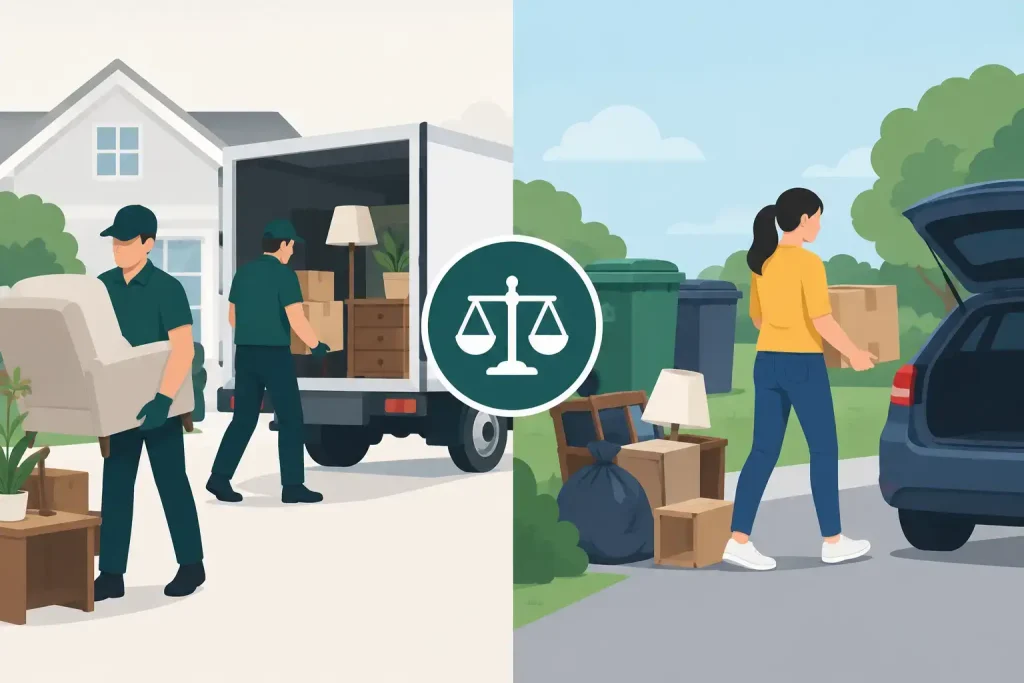
House Clearance Versus Self Disposal – Which Is Best?
A garage packed with old furniture, a loft full of boxes, or a flat to clear after a move can make one question feel urgent: should you do it yourself or book help? House clearance versus self disposal is not simply a choice between two prices. It is a decision about your time, vehicle, physical effort, disposal rules and how quickly you need the space back.
For a small number of light items, a trip to the local recycling centre may be the sensible route. For a full property clearance, heavy white goods or mixed renovation waste, professional collection can remove a great deal of pressure. The right answer depends on what is being cleared and what the job will really require from you.
House clearance versus self disposal: the real differences
Self disposal means sorting, lifting, loading, transporting and disposing of everything yourself. You may use your own car, hire a van, make several recycling-centre visits or arrange separate collections for items that cannot go in household waste. It gives you direct control, but it also puts the organisation and labour on your shoulders.
A house clearance service sends a team to remove agreed items from where they are. They handle the lifting, loading and transport, then take waste to authorised facilities for sorting, recycling and disposal. This is particularly useful when access is difficult, items are bulky, or there is simply too much to move safely in one vehicle.
Neither option is automatically better. The useful comparison is between the total effort and risk of doing it yourself, and the convenience and certainty of having the job managed from start to finish.
When self disposal can make sense
Self disposal is often practical if you have a small, straightforward load. Perhaps you are clearing a few bags from a shed, replacing one chair, or taking cardboard and clean household recycling to a local facility. If you already own a suitable vehicle, have time available and know your recycling-centre rules, the direct cost can be low.
It can also work well when you want to sort belongings gradually. Clearing an inherited property, for example, may involve checking paperwork, photographs and personal possessions before anything is removed. Taking your time can prevent useful or sentimental items being thrown away by mistake.
However, the phrase “free tip run” can be misleading. Many household waste recycling centres have booking systems, vehicle restrictions and rules about trailers, vans, trade-style vehicles and particular materials. A hire van may need to be registered in advance, while some sites limit the number of visits. Before loading up, check the rules for the specific borough or council area you plan to use.
The hidden cost of doing it yourself
The obvious cost of self disposal is fuel or van hire. The less obvious costs are often what change the calculation. A clearance can involve multiple journeys, parking charges, congestion or ULEZ considerations, insurance excesses, protective equipment and time away from work or family commitments.
Then there is the physical side. Old wardrobes, sofas, washing machines, mattresses and bags of rubble are awkward even before they reach the stairs. Moving them through a narrow hallway or down from a loft carries a real risk of strained backs, damaged walls and scratched flooring. Two people may be needed for a job that initially looked manageable alone.
Mixed waste also slows everything down. Timber, metal, electricals, garden waste, textiles, paint, plasterboard and general rubbish may need to be separated or taken to different areas of a facility. If you are clearing a renovation site or an office, the time spent sorting and making trips can quickly outweigh a seemingly cheaper DIY option.
When a professional house clearance is worth it
Professional clearance is usually the stronger choice when speed, labour and responsible disposal matter as much as the collection price. Landlords preparing a property for new tenants, families clearing a house after a bereavement, and homeowners facing a move often need the work completed in a defined window. A team can remove a full load in hours rather than leaving you with several days of lifting and driving.
It is also helpful for bulky or difficult items. Sofas, wardrobes, beds, fridges, freezers, cookers, office desks, filing cabinets and builders’ waste all require safe handling and suitable transport. A clearance team is equipped to load these items efficiently, including from upper floors, garages, lofts and gardens where access allows.
For commercial customers, the case is often clearer. Office clear-outs and building work create waste that should not be treated as ordinary household rubbish. A licensed provider can collect agreed materials, transport them properly and supply a Waste Transfer Note. That record provides reassurance that waste has entered the correct disposal chain.
Legal disposal is part of the decision
If you take your own household waste to a permitted recycling centre, you are responsible for following that site’s rules. If you pay someone else to remove waste, you have a duty to check that they are authorised to carry it. Using an unlicensed collector because the quote looks cheap can lead to a much more expensive problem if the waste is fly-tipped and traced back to you.
Ask whether the company is a licensed waste carrier, where waste is taken and whether a Waste Transfer Note can be provided. These are practical checks, not paperwork for paperwork’s sake. They help protect homeowners, landlords and businesses from unlawful disposal while supporting proper recycling and recovery.
A reputable clearance service should also be clear about what it can collect. White goods, electrical items, furniture, garden waste and construction materials can have different disposal requirements. Paint, chemicals, gas bottles, asbestos and other potentially hazardous materials may need specialist arrangements, so mention them when requesting a quote rather than leaving them in the pile.
Compare quotes with the whole job in mind
A professional quote should reflect the amount and type of waste, access, labour and disposal requirements. The cheapest figure is not always the best value if it excludes lifting from inside the property, leaves items behind, or gives no proof of responsible disposal.
Photos are one of the quickest ways to get a realistic estimate. Take clear pictures of the full load, include bulky items separately, and show stairs, lifts, narrow gates or restricted parking where relevant. Be honest about heavy materials such as soil, rubble, tiles and plasterboard, as weight affects transport and disposal costs.
When comparing self disposal with a collection service, put both options on the same list: vehicle or van hire, fuel, parking, recycling-centre access, disposal charges, packing materials, time, lifting help and the likelihood of needing more than one trip. A clearance quote may look higher at first, but can be better value once those parts are counted.
A practical choice for common clearance jobs
For a few recyclable household items, self disposal is often a reasonable weekend task. For a single bulky item, a booked collection can save a great deal of hassle, particularly if you do not have a suitable vehicle.
For a loft or garage clear-out, think about access and volume. Dusty boxes, old timber and broken furniture can take longer to bring down than expected. If the space is heavily packed, a clearance team can remove the load while you focus on deciding what should stay.
For a house or flat clearance, professional support is often the calmer option. This is especially true after a tenancy ends, before a sale, following a bereavement or when a property has been left with furniture and general rubbish. Chums Clearance can provide photo-based quotes and arrange collection for London and Surrey customers who need lifting, loading and lawful disposal handled in one visit.
For builders’ waste, assess it carefully before deciding. Clean, small quantities may be manageable yourself, but rubble, timber, plasterboard, fixtures and packaging build up quickly. Use a collection service when the volume, weight or programme makes repeated tip runs unrealistic.
The best route is the one that leaves your property clear without creating a second problem in your diary, your back or the waste trail. Start by measuring the load honestly, checking what your local facility accepts, and choosing help when the job deserves more than a car boot and a free afternoon.