What Happens to Your Rubbish after Collection?
When you book a rubbish removal service, it’s natural to wonder what happens after your waste leaves your property. Does everything end up in a landfill, or is it sorted and recycled?
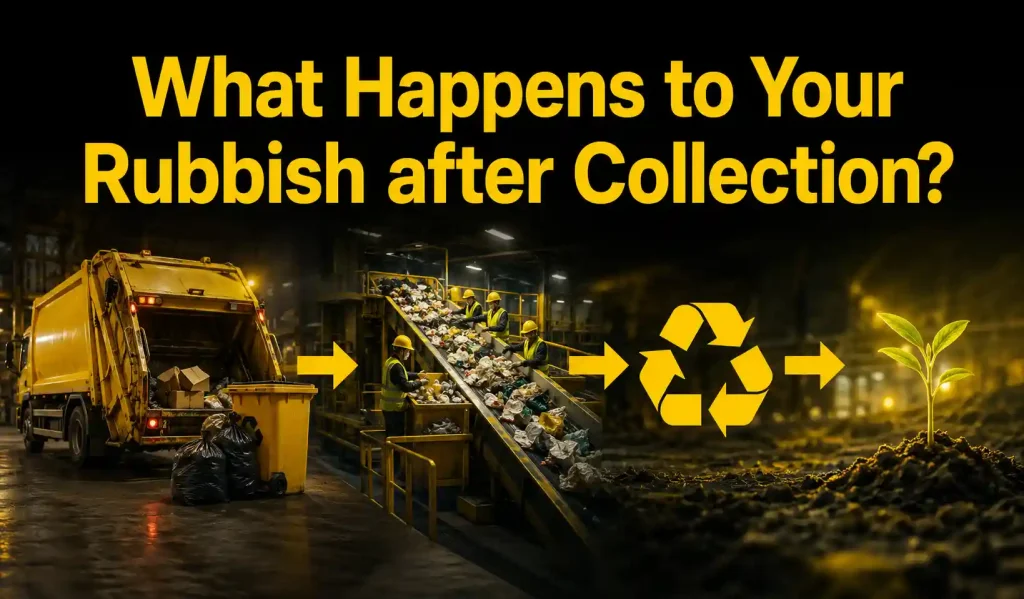
The truth is that professional waste carriers follow a structured waste recycling process designed to recover as much reusable material as possible while disposing of the remaining waste safely and legally.
At Chums Clearance, responsible waste management is a priority. Here’s a step-by-step look at what happens after your rubbish is collected.
Step 1: Collection from Your Property
The process begins when our team collects unwanted items from your home, office, garden, or construction site.
This may include:
- Household rubbish
- Old furniture
- Mattresses
- Garden waste
- Office waste
- Builders’ waste
- Electrical items
- Cardboard and packaging
Our team loads everything safely and transports it using licensed waste carrier vehicles.
Step 2: Transport to a Licensed Waste Transfer Station
Instead of going directly to landfill, collected waste is taken to an authorised waste transfer station.
These facilities are designed to sort, process, and prepare waste for recycling or disposal.
Every load is recorded to ensure it complies with UK waste regulations.
Step 3: Waste Sorting
One of the most important stages in the waste recycling process is sorting.
Different materials are separated, including:
- Wood
- Metal
- Plastic
- Cardboard
- Paper
- Glass
- Textiles
- Green waste
- Electrical equipment
- Mixed general waste
Many facilities use conveyor belts, magnets, air separators, and trained staff to improve sorting accuracy.
Step 4: Recyclable Materials Are Recovered
After sorting, recyclable materials are sent to specialist recycling facilities.
Examples include:
Metal
Metal is melted down and used to manufacture new products.
Wood
Clean timber is processed into wood chips, animal bedding, or biomass fuel.
Plastic
Plastic is cleaned, shredded, and transformed into new plastic products.
Paper and Cardboard
Paper fibres are recycled into packaging, newspapers, and other paper products.
Glass
Glass is crushed and melted to create new bottles and containers.
Step 5: Garden Waste Becomes Compost
Garden waste doesn’t usually go to landfill.
Instead, grass, leaves, branches, and hedge cuttings are composted or processed into mulch used in landscaping and agriculture.
Step 6: Electrical Items Are Processed Separately
Items such as:
- TVs
- Computers
- Microwaves
- Washing machines
- Refrigerators
must follow specific recycling rules under UK environmental regulations.
Valuable metals and electronic components are recovered while hazardous materials are safely removed.
Step 7: Non-Recyclable Waste Is Disposed of Responsibly
Not every item can be recycled.
Materials that cannot be recovered are sent to approved treatment facilities or energy recovery plants, where possible.
Only a small percentage should ultimately end up in landfill when waste is managed correctly.
Why Recycling Matters
A proper waste recycling process offers several environmental benefits.
Reduces Landfill Waste
Less waste going to landfill helps protect land and reduce pollution.
Conserves Natural Resources
Recycling reduces the need for extracting raw materials.
Saves Energy
Manufacturing products from recycled materials often uses significantly less energy than producing them from new resources.
Lowers Carbon Emissions
Recycling helps reduce greenhouse gas emissions associated with manufacturing and waste disposal.
How Chums Clearance Handles Waste Responsibly
At Chums Clearance, we believe rubbish removal should be both convenient and environmentally responsible.
Our team aims to:
- Collect waste safely
- Sort materials responsibly
- Maximise recycling wherever possible
- Work with licensed recycling facilities
- Follow UK waste disposal regulations
- Reduce unnecessary landfill waste
Responsible waste management benefits both our customers and the environment.
How You Can Improve Recycling Before Collection
You can help make recycling even more effective by:
- Separating cardboard from general waste
- Keeping recyclable materials clean
- Donating reusable furniture
- Separating garden waste
- Avoiding mixing hazardous waste with household rubbish
Small steps make the recycling process faster and more efficient.
Conclusion
Every bag of rubbish has a journey after it leaves your property. Through a structured waste recycling process, recyclable materials are recovered, reusable items are diverted from landfill, and remaining waste is managed responsibly.
Choosing a professional company like Chums Clearance means your waste is handled with care, helping protect the environment while ensuring full compliance with UK waste regulations.
If you need reliable rubbish removal, house clearance, garden waste collection, or office clearance, Chums Clearance is here to help with fast, responsible, and eco-conscious waste collection services.
FAQ's
Does all collected rubbish go to landfill?
No. Most waste is sorted first, and recyclable materials are recovered before any remaining waste is disposed of.
Can furniture be recycled?
Yes. Many wooden and metal furniture items can be recycled, while reusable furniture may even be donated.
Is garden waste recycled?
Yes. Garden waste is usually composted or converted into mulch.
Why should I use a licensed waste carrier?
Licensed waste carriers follow UK regulations and ensure waste is disposed of legally and responsibly, reducing the risk of fly-tipping.