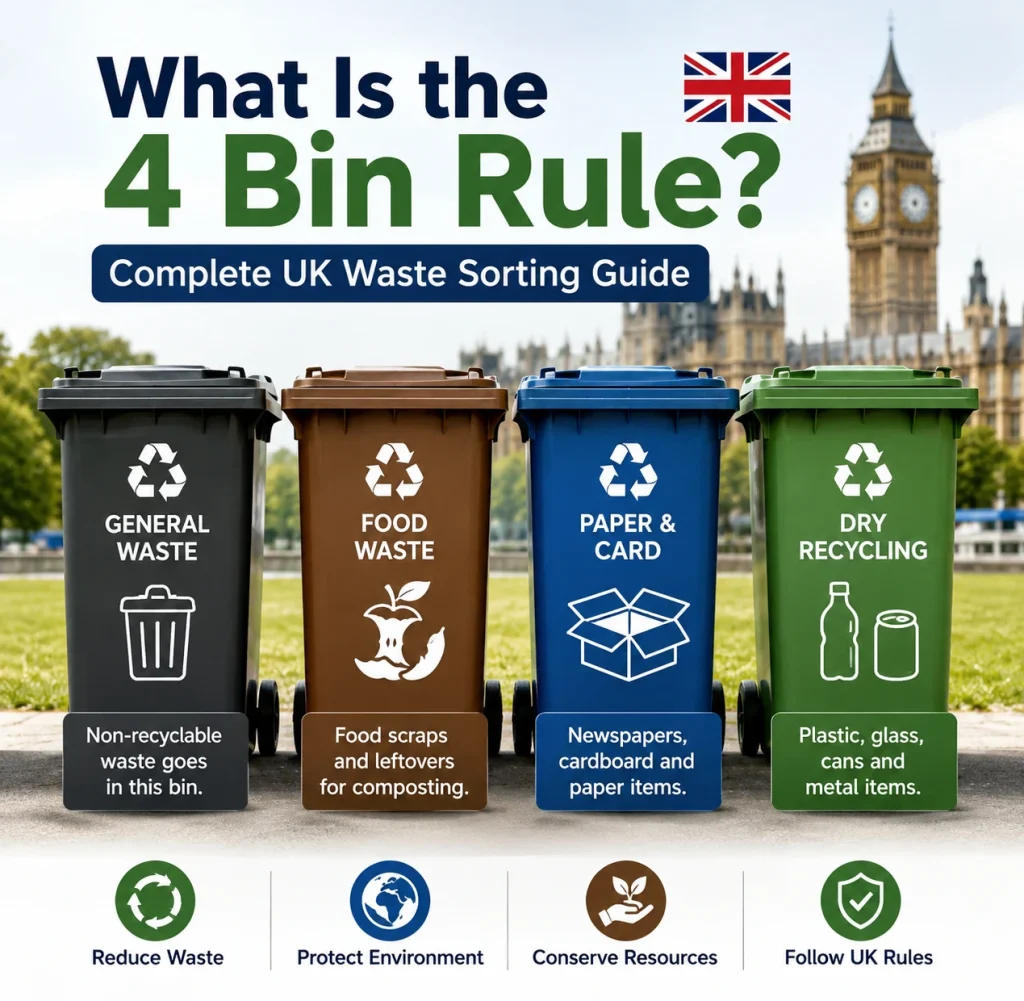
What Is the 4 Bin Rule? Complete UK Waste Sorting Guide
The 4 bin rule is a waste management system that separates waste into four different bins based on the type of material.
It helps improve recycling, reduce landfill waste, and ensure that recyclable and hazardous materials are disposed of correctly.
Many homes, offices, schools, hospitals, and industrial sites use the 4 bin rule to make waste segregation simple and effective. Instead of throwing everything into one container, each type of waste is placed in its designated bin, making recycling and disposal much more efficient.
Understanding the 4 Bin Rule
The exact color of the bins may differ depending on local council or workplace guidelines, but the system generally includes four categories of waste.
1. General Waste Bin
This bin is used for items that cannot be recycled or composted. Common examples include:
- Food wrappers
- Broken ceramics
- Disposable gloves
- Contaminated packaging
- Non-recyclable plastics
General waste is usually sent to landfill or waste-to-energy facilities.
2. Recycling Bin
The recycling bin is meant for materials that can be processed into new products, including:
- Paper
- Cardboard
- Glass bottles
- Plastic containers
- Aluminium and steel cans
Items should be empty and reasonably clean before being placed in this bin.
3. Organic Waste Bin
Organic waste includes biodegradable materials that can be composted, such as:
- Fruit and vegetable scraps
- Coffee grounds
- Tea bags
- Grass clippings
- Leaves and garden waste
These materials are converted into compost or other useful organic products instead of ending up in landfill.
4. Hazardous or Special Waste Bin
This bin is reserved for waste that requires careful handling because it may contain harmful chemicals or substances. Examples include:
- Batteries
- Paint containers
- Fluorescent light tubes
- Cleaning chemicals
- Electronic waste
Hazardous waste should never be mixed with regular household rubbish.
Why the 4 Bin Rule Matters
Proper waste separation offers several environmental and practical benefits:
- Increases recycling rates.
- Reduces contamination of recyclable materials.
- Lowers the amount of waste sent to landfill.
- Protects workers from hazardous materials.
- Supports a cleaner and more sustainable environment.
Following the system also helps businesses comply with waste management regulations and sustainability goals.
Common Mistakes to Avoid
Many recyclable items end up in landfill because of incorrect sorting. Avoid these common errors:
- Mixing food waste with recycling.
- Throwing batteries into general waste.
- Placing dirty pizza boxes in the recycling bin.
- Using the organic bin for plastic bags.
- Disposing of chemicals in standard rubbish bins.
Learning what belongs in each bin makes the entire waste management process more effective.
Where is the 4 Bin Rule Used?
The 4 bin rule is commonly used in:
- Homes
- Schools
- Offices
- Construction sites
- Hospitals
- Manufacturing facilities
- Public spaces and parks
Some local councils may adjust the bin colours or accepted materials, so it is always helpful to check local waste disposal guidelines.
Final Thoughts
The 4 bin rule is a simple but effective way to separate waste into general waste, recycling, organic waste, and hazardous waste. By placing each item in the correct bin, individuals and businesses can reduce landfill waste, improve recycling, and contribute to a cleaner environment.